
Day 18: 9/10/26
Genesis 18
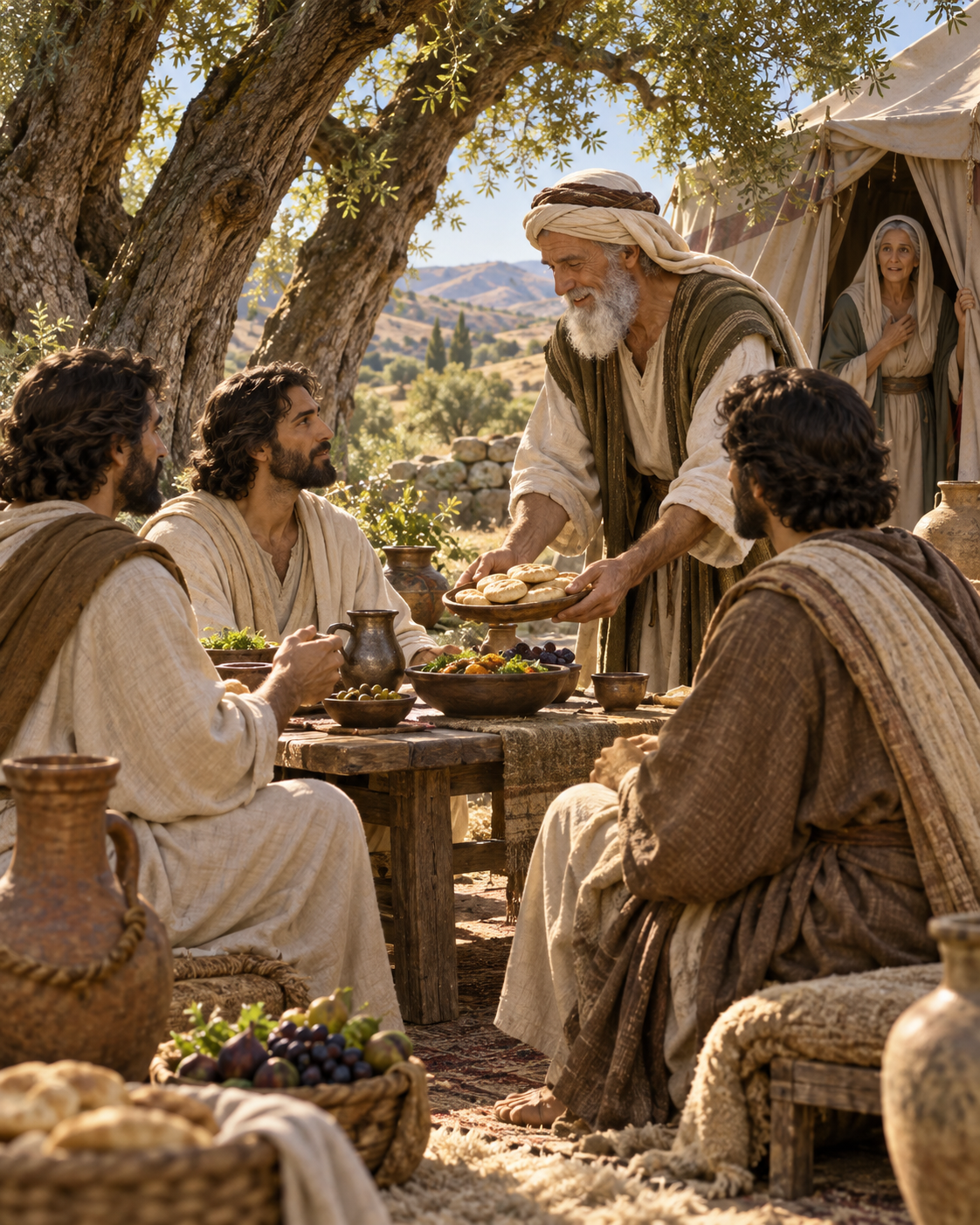
Three visitors arrive at Abraham’s tent — and the text moves fluidly between “three men” and “the LORD,” a theophany many theologians read as an early, veiled appearance of the pre-incarnate Christ alongside two angels. Sarah laughs behind the tent flap at the promise of a son, but this time it’s met with a direct question: “Is anything too hard for the LORD?” This verse becomes a doctrinal anchor for the rest of Scripture on the nature of God’s power against human impossibility.
Then the scene shifts entirely. God reveals His plan to judge Sodom and Gomorrah, and Abraham — extraordinarily — begins to negotiate. “Will you sweep away the righteous with the wicked?” He starts at fifty righteous people and bargains down to ten, and each time, God agrees. This is one of the boldest pictures of intercessory prayer in Scripture: not passive submission, but respectful, relentless appeal to God’s own character — His justice, His mercy — as the basis for the request. Abraham isn’t changing God’s mind by force of will; he’s appealing to who God has already revealed Himself to be.
Intercession was never meant to be quiet resignation. If you carry a burden for a person, a city, a family member walking toward destruction — you have permission to keep asking, keep appealing, keep standing there before God the way Abraham did. Not manipulating heaven, but reminding God, in worship, of who He already said He is.
Reflect:
Is there a “Sodom” in your life — a person or situation you’ve stopped interceding for because it feels hopeless? What would it look like to appeal to God’s character, rather than the situation’s odds, in your prayers this week?
Prayer:
Lord, is anything too hard for You? Give me Abraham’s courage to keep asking, keep standing in the gap, for the people You’ve placed on my heart. Amen
Leave a Reply